
Germany’s architectural landscape is as diverse as its history, with an astonishing array of styles that tell stories from different eras. German architecture offers a rich tapestry of styles from ancient Roman ruins to groundbreaking modernist designs. Whether you’re a history buff, an architecture enthusiast, or simply planning to explore Germany’s iconic buildings, this guide will walk you through the myriad architectural styles that dot the German landscape.
Ancient Beginnings and Roman Influence
The earliest structures in Germany date back to around 5,000 BC, including prehistoric pile dwellings around the Alps. However, the Roman Empire left a more visible mark on German architecture. Towns like Trier still house magnificent Roman constructions such as amphitheatres, thermal baths, and the Porta Nigra—spectacular remnants of a bygone era.
Medieval Mastery: Romanesque to Gothic
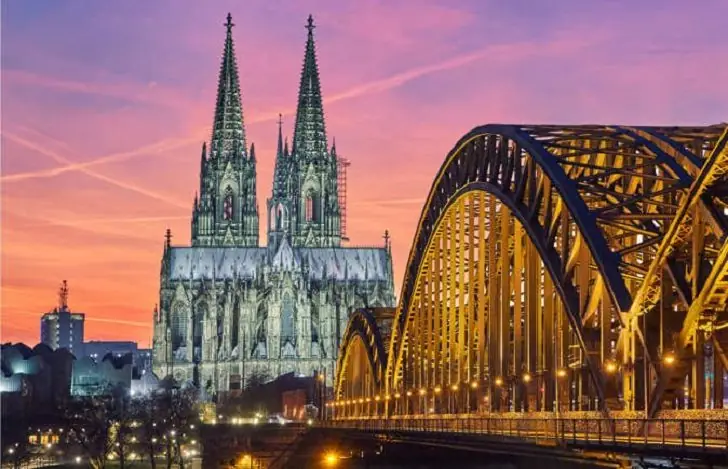
After the fall of Rome, German architecture evolved through the Middle Ages. The Romanesque style, with its thick walls and semi-circular arches, dominated initially seen in structures like the Maria Laach Abbey. This style gradually transitioned into the more ornate and vertically ambitious Gothic style, characterised by pointed arches, flying buttresses, and towering spires. The Cologne Cathedral and Ulm Minster are prime examples of Gothic architecture’s grandeur.
Renaissance and Baroque Splendor
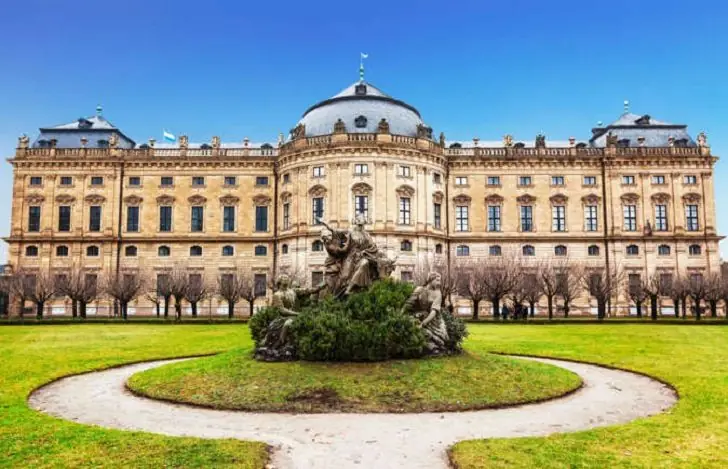
As the Renaissance swept through Europe, Greco-Roman principles of symmetry and proportion in Germany revived. Buildings like Heidelberg Castle and the Fugger Houses in Augsburg exemplify this style. The Baroque period followed, emphasising grandeur and dramatic intensity, seen in the majestic Würzburg Residence and Charlottenburg Palace.
Rococo to Neoclassicism: Aesthetic Transitions
The Rococo style, known for its elaborate ornamentation, marked the late Baroque phase, with Sanssouci Palace as a key example. The subsequent Neoclassical movement returned to the simplicity and elegance of classical forms, prominently featured in Berlin’s Brandenburg Gate and Altes Museum.
Historicism and Art Nouveau: Echoes of the Past
The 19th century ushered in Historicism, which drew from various historical styles, culminating in the fairy-tale appearance of Neuschwanstein Castle. This period also saw the rise of Art Nouveau, or Jugendstil, which integrated natural forms into architectural design, showcased in the Hackesche Höfe in Berlin.
Bauhaus and Beyond: Modern Movements in German Architecture
The Bauhaus movement radically transformed German architecture in the 20th century. Founded in Weimar, the Bauhaus embraced functionalism and simplicity, a philosophy reflected in the Bauhaus School building in Dessau. This style paved the way for postmodernism and contemporary architectural innovations in Germany.

Traditional German Architecture: The Charm of Half-Timbered Houses
The quaint half-timbered houses often come to mind when thinking of traditional German architecture. These structures, found throughout Germany, from Quedlinburg to Rothenburg ob der Tauber, feature exposed wood frames filled with stucco or brick, representing a style that has endured for centuries.
The Impact of Historical Events on German Architecture
It’s important to note that much of Germany’s medieval architecture was lost during the bombings of World War II. This destruction makes the surviving structures even more precious and underscores the resilience of German architectural heritage.
Celebrated German Architects
While many buildings are famous in their own right, the architects behind them are equally noteworthy. Karl Friedrich Schinkel, Gottfried Semper, and modernists like Walter Gropius and Ludwig Mies van der Rohe have all left indelible marks on the architectural world with innovative designs and visionary constructions.
Conclusion
German architecture encompasses a broad spectrum of styles, from ancient stilt houses to futuristic postmodern structures. Each era brings distinct characteristics and innovations, reflecting the time’s cultural, political, and social changes. For travelers and enthusiasts alike, exploring Germany through its buildings is not just a journey through spaces but through time itself. Whether it’s the historical depth of Gothic cathedrals or the stark minimalism of Bauhaus, Germany offers a unique architectural voyage that is as educational as visually stunning.